Yanlong Yang

PhD candidate · James Cook University

From sensors to deployed AI.

I build deep-learning perception for autonomous driving, generative models for inverse problems, and the systems that put them to work in the field — from radar signal chains and data pipelines to a crocodile-detection system for the Queensland Government.

Cairns, Australia · Advisor Dr Tao Huang · Expected Oct 2027

perceptiongenerative modelssystemssignals & hardware

Four sides of my work: perception for autonomous driving, generative models, applied AI systems, and the signals and hardware underneath.

CVPR 2026first-author paper
7publications
9granted patents
4 yrsindustry R&D

Experience & skills

What I do

Autonomous-driving perception

Deep learning for 3D detection, radar–LiDAR fusion and tracking, from research models to production pipelines.

  • PyTorch
  • 3D detection
  • BEV fusion
  • point clouds
  • world models

Generative models & inverse problems

Diffusion priors and self-diffusion for recovering clean images and point clouds from degraded, incomplete data.

  • diffusion models
  • self-supervised learning
  • blind deconvolution
  • super-resolution

Applied AI & systems

Taking models into the field and building the systems around them — data loops, deployment, and full products.

  • deployment
  • data pipelines
  • team lead
  • web & cloud

Signals & hardware

Radar signal processing, multi-sensor synchronisation and embedded hardware — the layer the models stand on.

  • MIMO radar
  • FFT / CFAR / AoA
  • ROS
  • PCB design
  • embedded MCUs

Papers

Selected research

All publications →
2026Conference
blur kernel, estimated jointlynoise → self-diffusion → sharp image

★Self-Diffusion Driven Blind Imaging

Y. Yang, G. Luo

IEEE/CVF Conference on Computer Vision and Pattern Recognition (CVPR) · pp. 26711–26720

Zero-shot, self-supervised blind imaging: an iterative reverse self-diffusion process that starts from pure noise and jointly refines the sharp image and the unknown blur kernel — no pre-training.

PaperarXivProject
2025Preprint
sparse radar → LiDAR-like densitypriorlearned from arbitrary, unpaired LiDAR

★Unsupervised Radar Point-Cloud Enhancement via Arbitrary LiDAR-Guided Diffusion Prior

Y. Yang, J. Liu, G. Luo, H. Li, E. Ahn, M. Rahimi Azghadi, T. Huang

arXiv:2505.09887

Enhances sparse, noisy radar point clouds toward LiDAR-like density with a diffusion prior learned from arbitrary, unpaired LiDAR data.

arXivCodeProject
2025Journal
radar heatmap + LiDAR → BEV detectionsanchor-box-free

★RaLiBEV: Radar and LiDAR BEV Fusion Learning for Anchor-Box-Free Object Detection Systems

Y. Yang*, J. Liu*, T. Huang, Q.-L. Han, G. Ma, B. Zhu

IEEE Transactions on Circuits and Systems for Video Technology · 35(5):4130–4143 · *equal contribution

Fuses radar range–azimuth heatmaps with LiDAR in bird's-eye view for all-weather detection: +13.1% (clear) and +19.0% (fog) at IoU 0.8.

IEEEarXivCodeProject

Recent

News

  • Aug 2026Launched ausimmitool.com, a public data site for Australian skilled migration.
  • Jun 2026DeblurSDI presented at CVPR 2026.
  • 2026Reviewing for AAAI 2026 and ICLR 2026.
  • 2025Became Cairns Campus Officer, JCU Student Association; represented JCU at the Australian University Student Voice Conference, Gold Coast.
  • Oct 2025Self-Diffusion for Solving Inverse Problems released on arXiv.
  • May 2025RadarINV released on arXiv; RaLiBEV published in IEEE TCSVT.
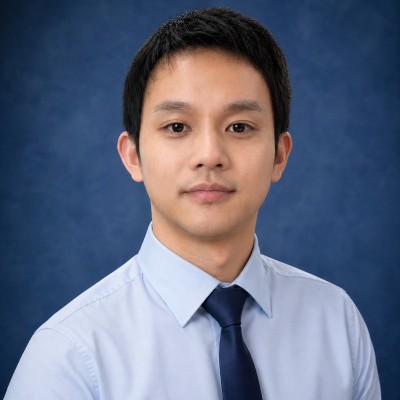
Portrait of Yanlong Yang

I work across the whole stack of AI for perception. At Vanjee Technology in Beijing I spent four years as an algorithm engineer on autonomous and vehicle–road cooperative driving: 3D object detection and radar–LiDAR fusion, the MIMO radar signal chain underneath them, and a data closed-loop system I led to keep models improving after deployment — with nine granted patents along the way.

Projects

Selected projects

All 11 projects →